
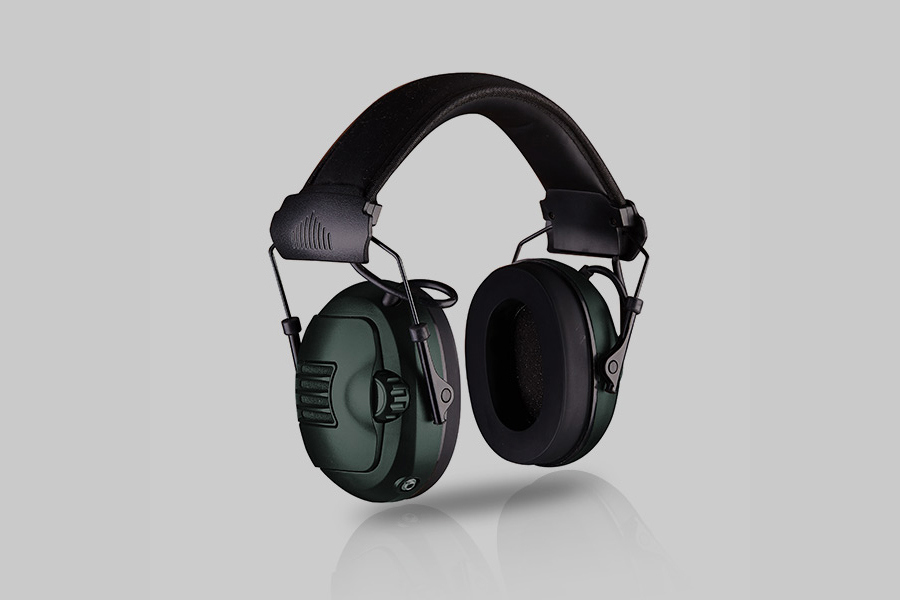
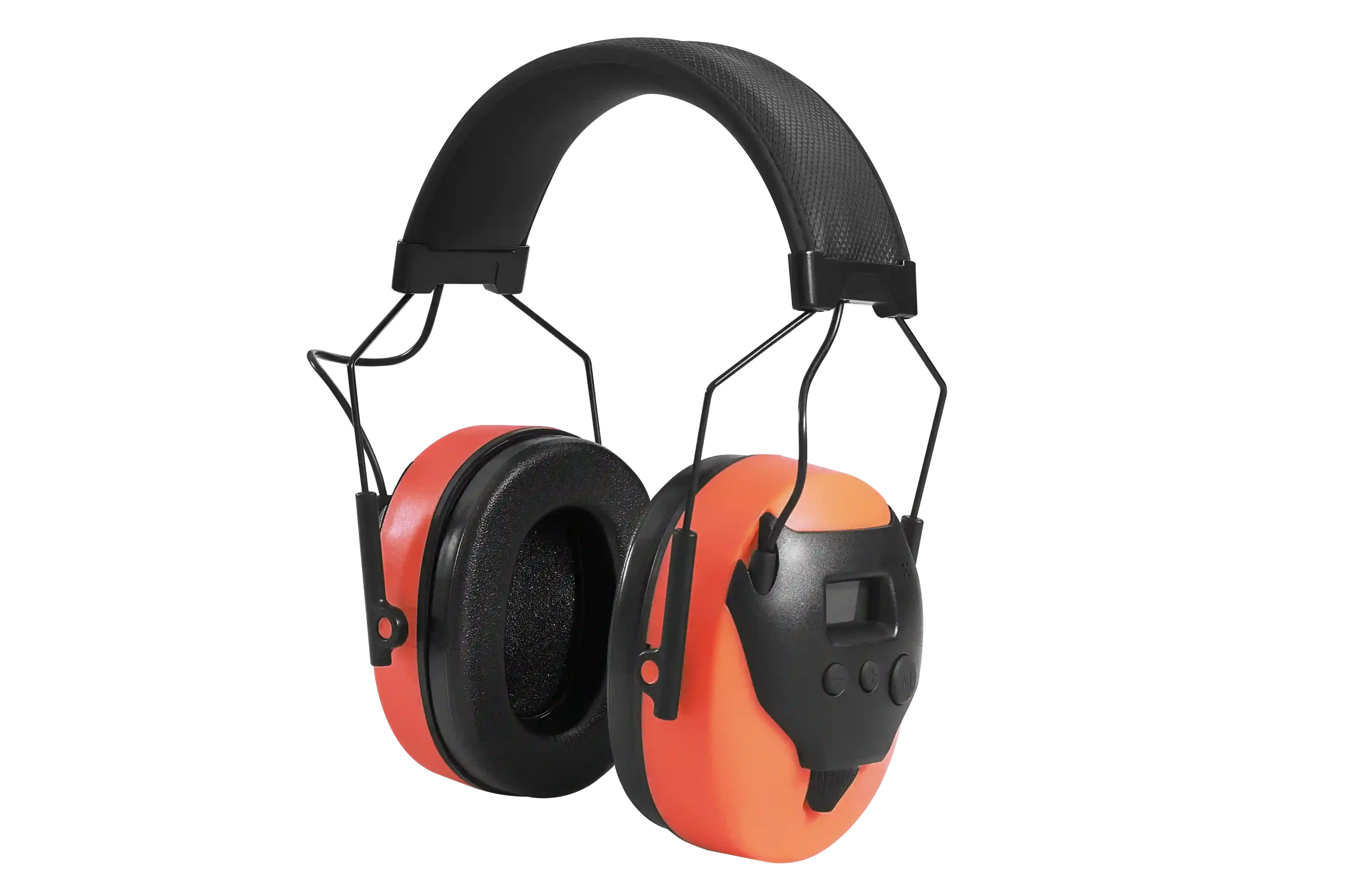
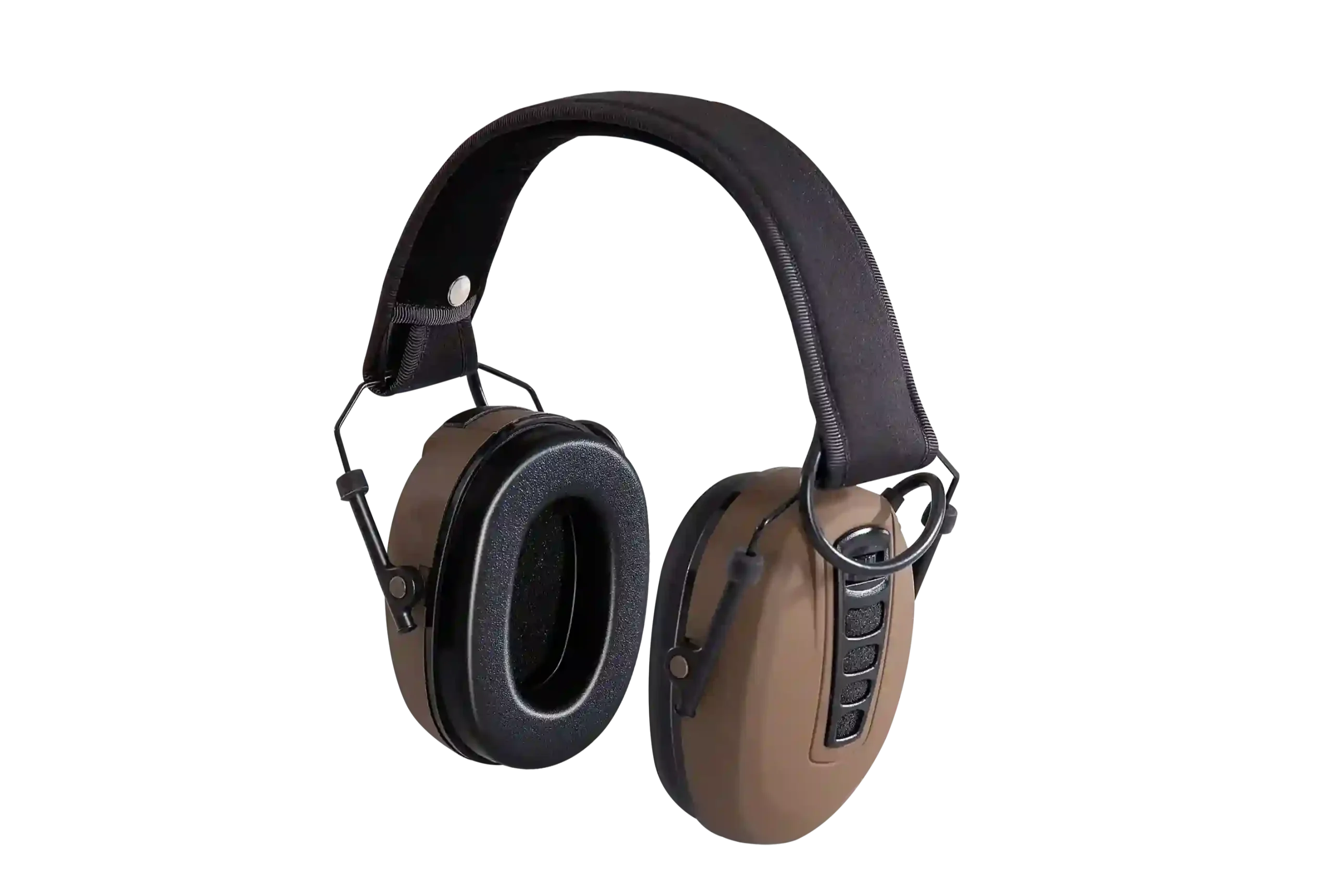
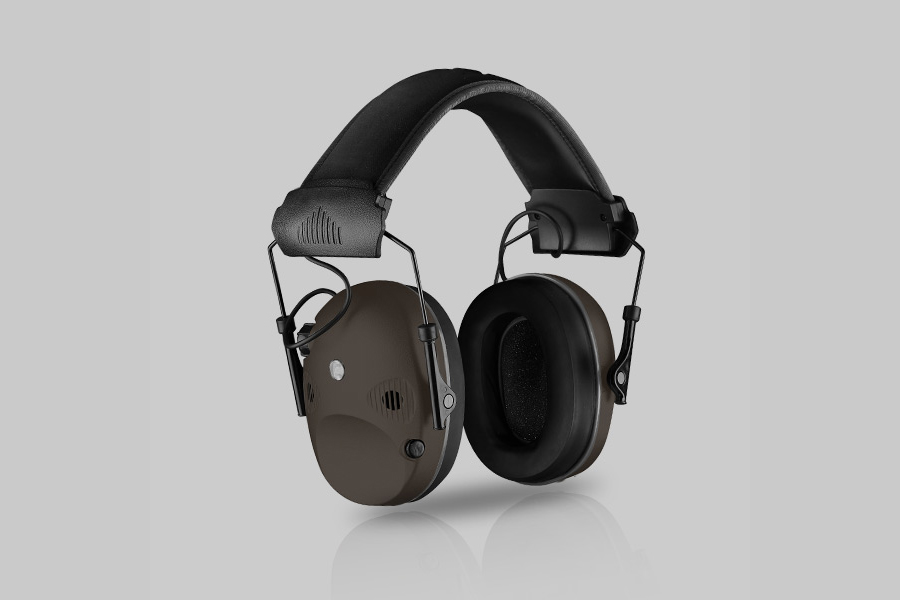
Gunshots cause permanent hearing loss, yet standard plugs block vital ambient sounds. An electronics earmuff solves this by suppressing dangerous blasts while amplifying whispers for total situational awareness and safety.
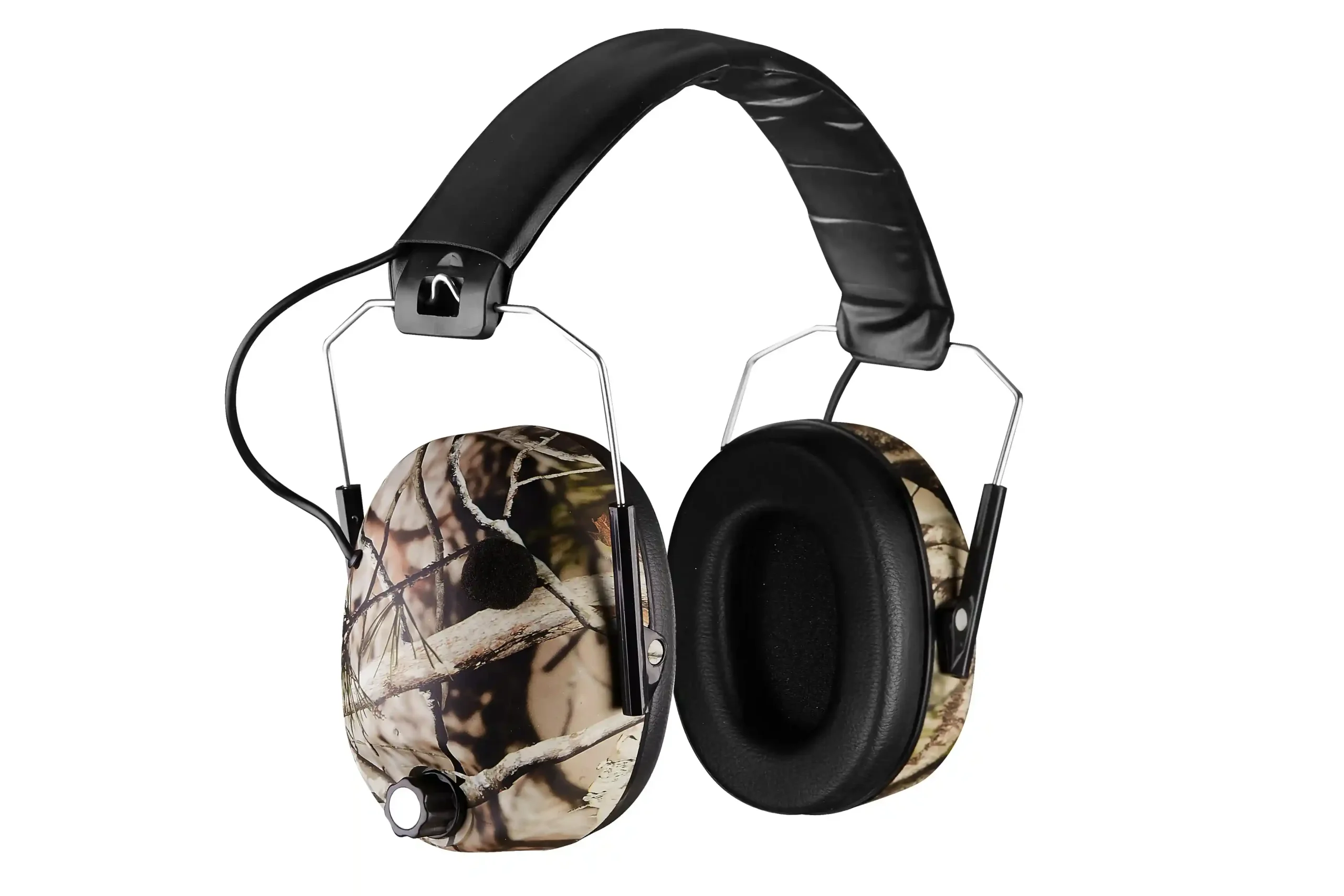
Electronics earmuff technology works by using external microphones to monitor ambient noise. When sound levels exceed 82dB, the electronic compression circuit instantly suppresses the noise to safe levels. Simultaneously, the hearing protector amplifies low-level sounds like speech or footsteps, ensuring the user maintains environmental awareness without risking permanent hearing damage from high-decibel gunfire.
Let’s dive deeper into the sophisticated internal components that make this life-changing safety equipment possible for every shooter.
Active Noise Reduction: Built-in Microphones and Electronic Compression Circuitry
The core of a modern electronics earmuff is far more complex than the simple foam and plastic found in passive alternatives. At its heart lies a sophisticated array of hardware designed to act as a high-speed processor for your ears. Most high-quality units feature dual or quad omnidirectional microphones mounted on the exterior of the ear cups. These microphones are strategically placed to mimic human binaural hearing, allowing the user to maintain a sense of directionality—crucial for identifying where a deer is moving or where a range command is coming from.
Once the microphones capture an incoming sound wave, the signal is not sent directly to the internal speakers. Instead, it is routed through a Printed Circuit Board (PCB) containing an electronic compression circuit. This circuit acts as a gatekeeper. In an analog system, the circuit uses high-speed transistors to limit the voltage passed to the speakers. In more advanced digital models, a Digital Signal Processor (DSP) samples the incoming audio thousands of times per second. This technology allows the safety earmuff to differentiate between continuous background noise, like the hum of a ventilation system, and the sudden, sharp impulse of a rifle shot.
Furthermore, the quality of this circuitry determines the “fidelity” of what you hear. A premium hearing protector ensures that the sound remains natural and clear, avoiding the “robotic” or “tinny” quality found in budget versions. By integrating these electronics into a high-NRR (Noise Reduction Rating) shell, the device provides a hybrid defense: physical insulation from the ear cups and active management from the electronics, ensuring the shooter’s eardrums are never exposed to the full energy of a muzzle blast.
Ambient Sound Pick-up: Amplifying Subtle Sounds Like Footsteps and Speech
One of the greatest tactical advantages of using an electronics earmuff is its ability to provide “super-human” hearing. In a hunting scenario, the environment is often quiet, but the sounds that matter—the snap of a twig, the rustle of leaves, or the distant call of a bird—are often at the very edge of human hearing thresholds. The internal amplifier of a high-end hearing protector is designed to take these low-decibel signals and boost them, sometimes up to five times their original volume.
This amplification is not just about making everything louder; it is about clarity and situational awareness. For hunters, this means the difference between spotting a trophy buck and being surprised by one. For sport shooters on a busy range, it allows for seamless communication with a range officer or coach. You can hold a conversation at a normal volume without ever needing to lift the ear cup, which is a significant safety benefit. If you were wearing traditional passive muffs, you would likely find yourself constantly removing them to hear instructions, inadvertently exposing your ears to nearby gunfire.
Modern safety earmuff designs also focus on frequency shaping. They are often tuned to emphasize the frequencies associated with the human voice and high-frequency “clues” in nature, while filtering out low-frequency wind noise. This ensures that even in a breezy field, you can hear your hunting partner’s whisper clearly. This dual-purpose functionality—protecting against the loud while highlighting the quiet—is what makes electronic protection the gold standard for modern outdoor enthusiasts.
The Trigger Threshold: Responding Instantly When Sound Exceeds 82dB
The “magic” of an electronic hearing protector lies in its reaction to the 82dB threshold. To put this in perspective, a normal conversation is roughly 60dB, while a vacuum cleaner might reach 75dB. The 82dB mark is a scientifically recognized safety limit; exposure to sounds above this level for extended periods can lead to gradual hearing fatigue and damage. A gunshot, however, is a massive spike, often reaching 140dB to 165dB. This is not just loud; it is physically traumatic to the delicate hair cells in the cochlea.
The electronics earmuff is constantly “listening” for this threshold. The moment the microphones detect a sound wave that hits the 82dB limit, the internal processor reacts. This reaction time is measured in milliseconds—often less than 1 or 2 milliseconds. To the human ear, this is perceived as instantaneous. There is no lag between the hammer falling and the protection kicking in. This precision is vital because even a tiny delay would allow the initial “crack” of the supersonic bullet to reach the ear canal at full force.
By setting the threshold at 82dB, the safety earmuff ensures that the user is protected from all dangerous impulse noises, including steel target impacts and loud muzzle brakes from adjacent shooters. This threshold management is what allows the device to stay in “amplification mode” for most of the day, only switching to “protection mode” for the brief micro-seconds when the environment becomes hostile. It is a smart, automated system that removes the guesswork from hearing safety.
Compression Action: Cutting or Reducing Power to the Speakers
When the 82dB threshold is breached, the electronics earmuff performs its final, most important task: the compression action. It is a common misconception that the earmuffs simply “turn off.” While some older or cheaper models used “clipping” (which abruptly cuts the sound, creating a distracting silence), modern high-quality hearing protector units use sophisticated dynamic compression. Instead of a total blackout of sound, the circuit instantly reduces the gain (power) of the amplifier to a safe, comfortable level.
This compression action happens so smoothly that the shooter hears a suppressed “pop” rather than a deafening explosion. Because the electronic signal is limited, the only sound that reaches the user’s ear is the residual noise that manages to pass through the physical foam and plastic shell of the safety earmuff. This combination of active compression and passive insulation is incredibly effective. Once the loud noise dissipates—a phase known as the “release time”—the electronics immediately restore power to the microphones, allowing the user to hear the sound of the shell casing hitting the ground or the impact on the target.
The engineering behind this “attack and release” cycle is what separates professional gear from toys. If the release time is too slow, the user is left in silence for seconds after the shot, losing awareness of their surroundings. If the attack time is too slow, the protection fails. By perfecting this electronic “pinch” on the power output, manufacturers ensure that the shooter remains protected, informed, and comfortable through hours of high-volume fire. This seamless transition is why electronics earmuff technology has become an essential part of the modern shooter’s kit.
Electronic earmuffs provide the perfect synergy of high-tech sound amplification and instantaneous hearing protection for shooters and hunters alike.
Would you like me to help you compare specific NRR ratings for different hunting environments?
.webp)
 English
  Spanish
  Portuguese
  German
  French